

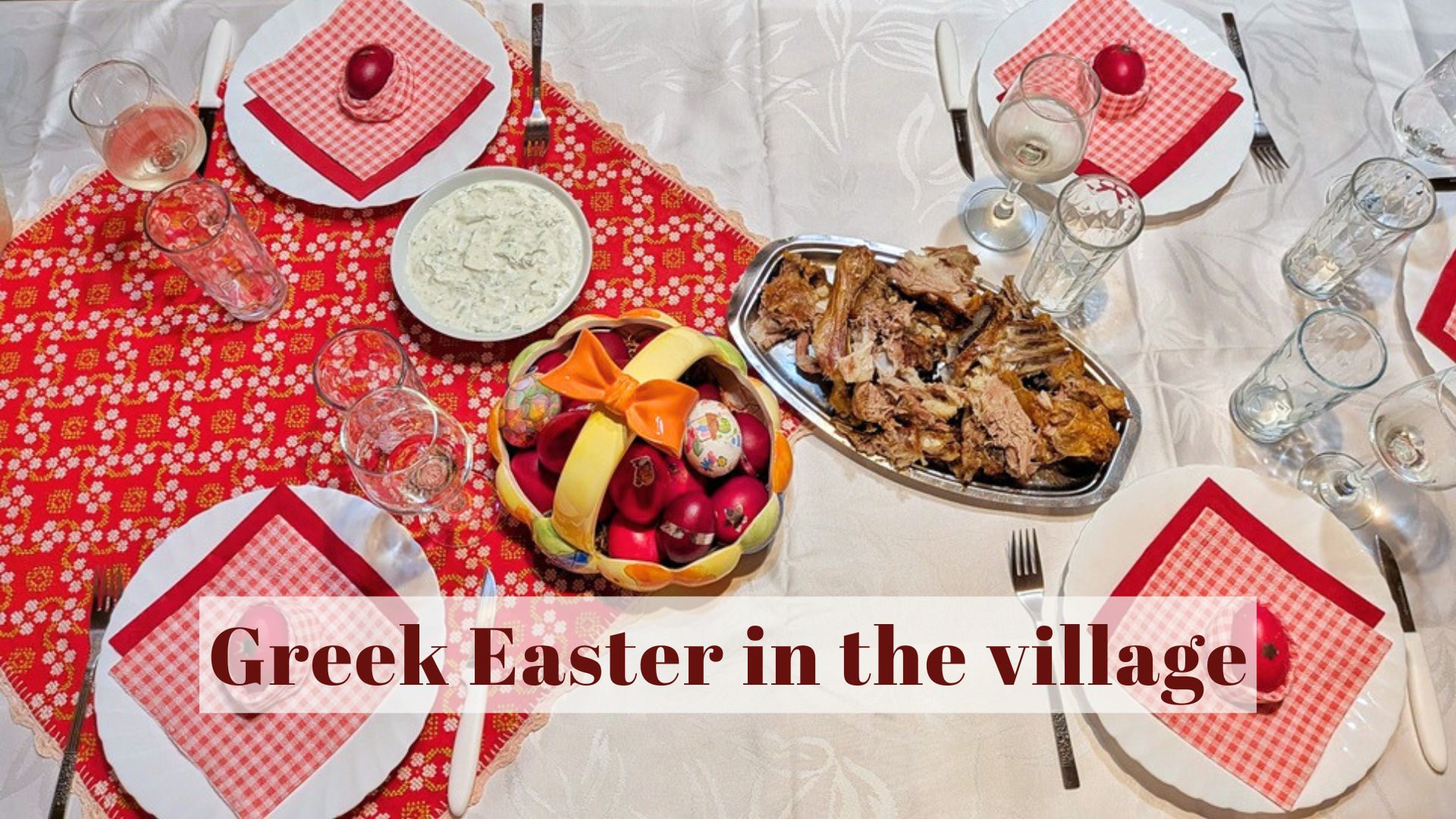
Easter in the village, a real Greek experience
This was my fourth Easter in Greece. But it was the first time I experienced it properly: not in a city like Rhodes, not just parts of it, but the full thing. From start to finish, in a village – THE village – with a big Greek family, following traditions that are both deeply rooted and still completely alive.
And now I understand why everyone says that if you really want to experience Greek Easter, you have to go to a village. Follow me there, and you’ll understand too.
[DISCLAIMER: if you are vegan or particularly sensitive, some images might disturb you.]
Road to the village before Orthodox Easter
We left Rhodes on Friday evening and headed to Kalapodi, a small village a couple of hours north of Athens where Nikos’ family is from.
Like every small village – in Greece but in Italy too – it’s one of those places where everything feels slower and more grounded. His parents live there, his grandmother too, and it’s also where his fields are. It’s not a place people go for holidays: it’s very much part of everyday life.
By the time we arrived, in the middle of the night, the house was already full.
For the weekend everyone was there: his parents, his grandmother, his sister with her American boyfriend (yep, two foreigners, not just one!), his aunt and husband, his cousin with her husband and their two teenage kids — and of course Bentley, the dog. Meals and conversations by the fireplace were long, loud, chaotic in the best way. People constantly coming and going, food always on the table, voices overlapping. And that suspended “outside-of-time” feeling that only holidays have.
“Megalo Sabbato”: the Holy Saturday before Easter
Saturday was still technically part of the fasting period. In practice, that meant a delicious lunch based on fish and seafood: vinegar-boiled octopus, grilled prawns, fried calamari – all gluten free, of course, because women in the family definitely have remarkable cooking skills!
Everything was simple, but incredibly good. The kind of meal where the table is full, no one is in a rush, and food is just part of a much bigger moment. And also: where you can’t stop eating until every plate in front of you is completely empty (sorry, I just can’t resist fried calamari).
But the real turning point of Orthodox Easter in Greece comes late on Saturday night.
In the evening, everyone starts getting ready for church. Properly ready: elegant clothes, make-up and perfect hair style for women, attention to detail. There’s something about that moment that feels almost ceremonial even before it begins.
Each of us was given a decorated candle (lampada, in Greek) by Nikos’ grandmother, then around 23:30 we walked to church together, along with the rest of the village.
At some point during the mass the whole church goes dark, until the priest lights his candle and shares the light with those in front of him – who pass it to the people behind them and so on. Candles are lit one by one, until the whole space is glowing in a sacred murmur.
Then, outside the church, at exactly midnight, the priest announces: Christos Anesti – Christ has risen. And suddenly, everything explodes into life. Fireworks, people hugging, exchanging wishes – Alithos Anesti. Light everywhere. Noise, joy, celebration. And a bit of anxiety for hair or coats catching fire – but no, we were safe!
After some time, everyone starts heading home, carefully protecting their candle from the wind because the flame has to make it all the way back.
The rituals of Easter night in Greece
Back at the house, there’s one last ritual before going inside. You use the flame of the candle to draw a cross three times above the entrance door. Only then do you step in – always with your right foot first.
And only then, finally, the fast is broken.
Traditionally this happens with a soup called mageiritsa, but in Nikos’ family they do things a bit differently: they roast a goat. Before eating, though, there’s another small ritual to complete.
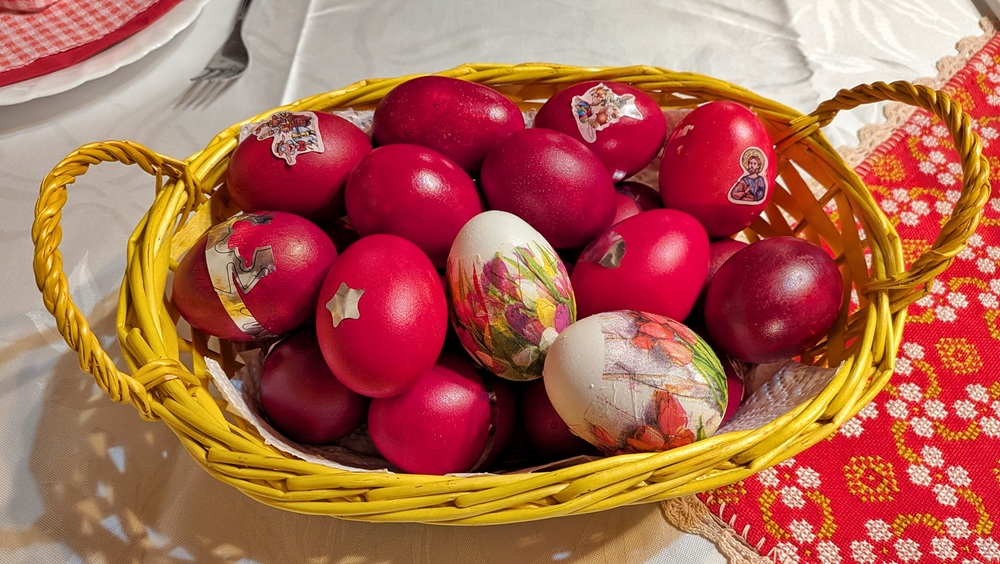
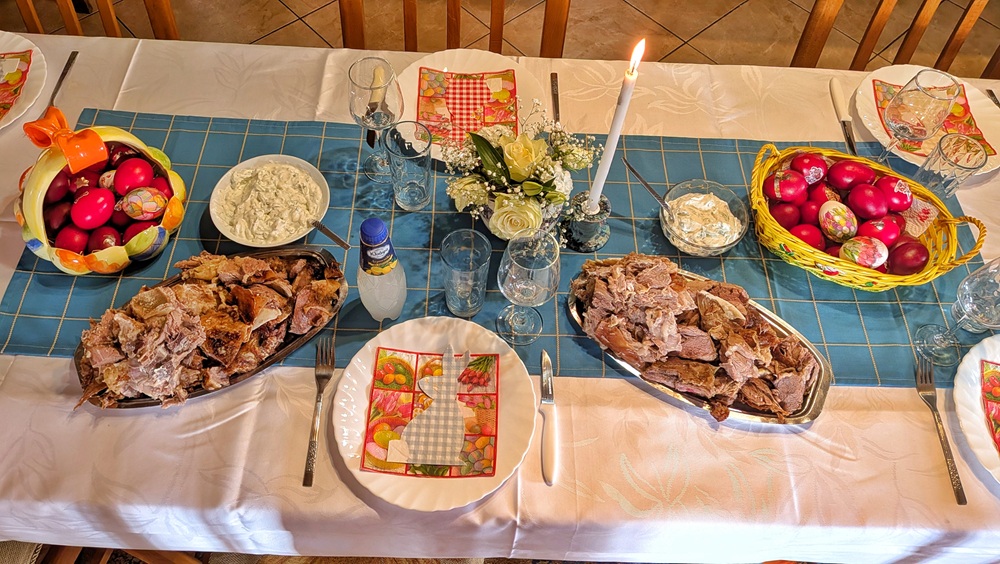
Red-dyed eggs are brought to the table and everyone pairs up. You tap your egg against someone else’s, saying Christos Anesti – Alithos Anesti, first top against top, then bottom against bottom. It’s playful, a little competitive, and very symbolic at the same time.
Only after that you actually start eating. By that point, as you might have guessed, it’s well past midnight, but no one seems tired (besides me). If anything, it feels like the real celebration is just beginning. Although your stomach won’t agree with you completely, if you’re not used to eating goat in the middle of the night.
Orthodox Easter Sunday in a Greek village
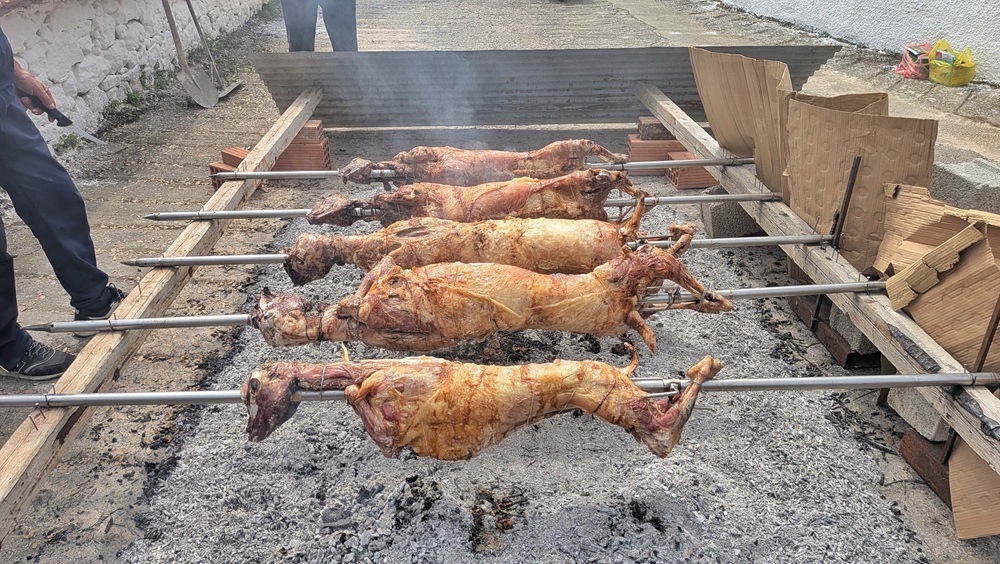
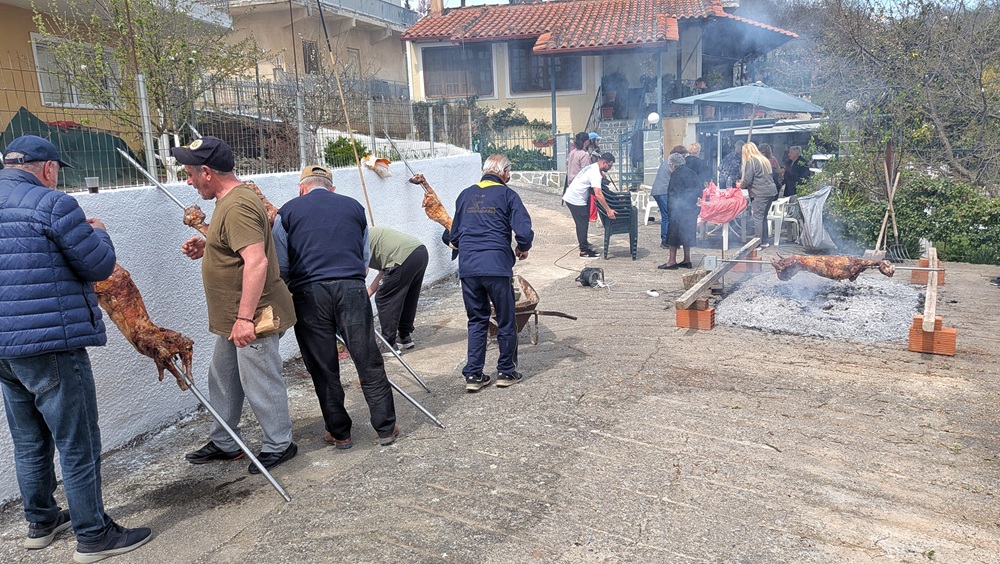
Sunday starts early. Very early, for men at least. At sunrise, they are already outside, lighting the fire and preparing the coals. Because Easter Sunday in a Greek village means one thing above all: lamb on the spit (sorry vegan friends).
In our case, it wasn’t just one. There were four lambs and one goat, because it was a shared fire between the families of the neighborhood.
From the moment lambs are positioned on top of the coal, the day unfolds around the fire.
People gather outside, standing or sitting nearby, keeping an eye on the meat, making sure that wind doesn’t damage anything, adjusting the heat. It’s a slow process that takes hours, and no one is trying to rush it.
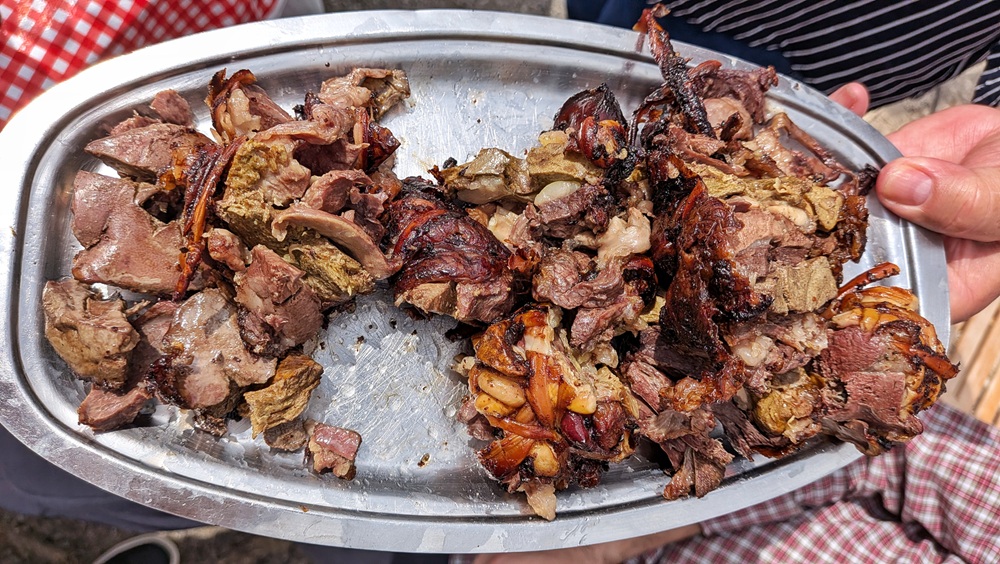
At first, on the table there are coffee and Easter cookies. Then, gradually, wine and beer appear. Along with more food – spinach pie, cheese pie, and especially kokoretsi, which is probably the most traditional (and for some, most intimidating) Easter dish: lamb offal wrapped in intestines and roasted on the fire. It’s one of those things that feels very “Greek village”: something you might not choose yourself, but once you’re there, it just makes sense.
[Confession: I don’t like kokoretsi so I didn’t have any. But I swear that I tried it once, in the past!]
Anyway – by the time the lambs are finally ready, hours later, each family takes their own and heads back home to enjoy the actual Easter lunch. After a whole morning spent together outside, around the fire, the final meal becomes something slightly more intimate again, but still very much part of a shared experience.
Easter in the village: the experience
Orthodox Easter is different from the Catholic one, especially for the rituals and traditions that go with it. But also: Orthodox Easter in the village, with family, is different from anything else you might experience… and it’s something you have to try, at least once, if you love Greece.
For us, this was a particularly special one – but, besides that, it’s an event truly rich of meaning, where all traditions come back to life (even to the most modern life) and you feel the strength of the community.
Easter in Greece is about family, about showing up, doing things together, repeating gestures that have been passed down for generations without questioning them too much. And somehow, in the middle of all that, feeling exactly where you’re supposed to be.
If you ask me, I’d happily spend Christmas in Italy and Easter in Greece for the rest of my life.
Amen.
p.s. have you ever experienced Easter in Greece? Let me know your anecdotes in the comments!


No comments yet