

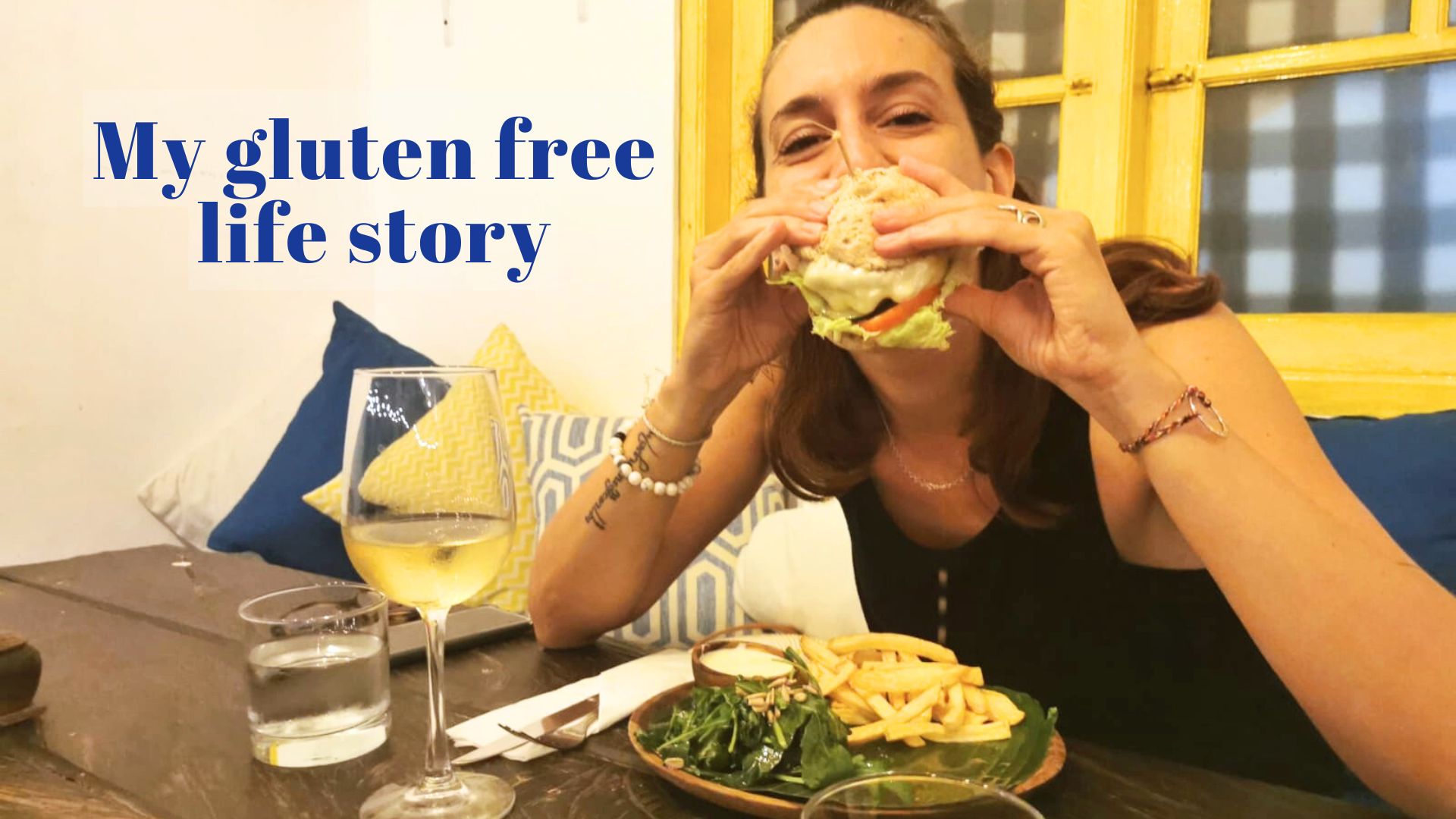
The story behind my gluten free life
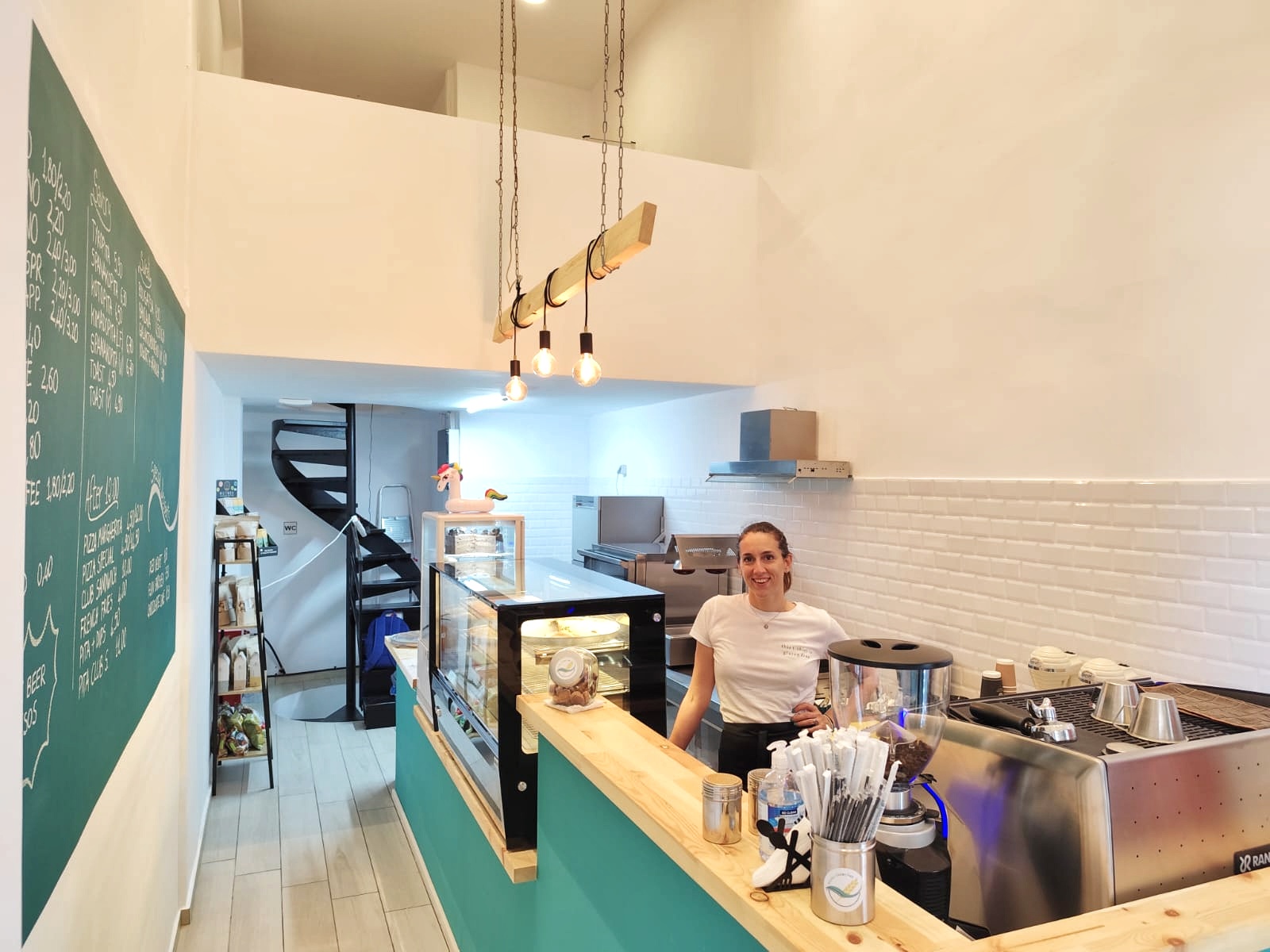
Some of you may know me as the person (well, one of the people) who opened the first 100% gluten free café in Rhodes a couple of years ago. From the outside, it might look like a simple entrepreneurial project, a place created for those who, like me, can’t eat gluten and still want to enjoy good food without worries.
But the truth is that Rhodes Gluten Free didn’t start as a business idea. It started much earlier, with years of unexplained symptoms, a lot of trial and error, and one surprisingly simple discovery that changed the way I eat, cook, travel… and, ultimately, live.
So, if you’ve ever wondered why gluten free food became such a big part of my life, this is the story behind it.
When symptoms feel normal for years
Looking back now, the signs had been there for a long time.
Since I can remember, I have been constantly bloated. I used to joke that all it took was eating a single grape for my stomach to swell like that of a pregnant woman. At the time it sounded funny, but in reality it wasn’t – and it was something I had accepted as normal.
There were also days when the pain was much worse than simple bloating. When I worked as a psychologist and school tutor, I often spent long afternoons sitting with students from right after lunch until evening. Some days my stomach would start hurting so badly that I almost felt faint.
Another “small” detail that, in hindsight, makes perfect sense, is that I always hated tight waistbands. Non-elastic jeans, tights, anything pressing on my stomach made me feel constrained. I avoided those clothes whenever I could because they made me incredibly uncomfortable.
At the time, though, I didn’t connect those things to a specific problem: they were simply part of how my body worked.

Was it endometriosis? Yes, but not only…
In 2011 I found out I have endometriosis, and in 2012 I underwent surgery for it.
Like many women with this condition, I had also been experiencing digestive symptoms, so I assumed that everything was connected. I was convinced that once the surgery was done and the disease under control, my stomach issues would finally disappear.
Spoiler: they didn’t.
That’s why, after the operation, I started studying nutrition on my own, trying to understand whether diet could help with endometriosis. At the time there was very little information available on the subject, so I ended up reading the only comprehensive book I could find on the relationship between endometriosis and nutrition (in English, because it didn’t exist in Italian).
I tried everything suggested there. I removed inflammatory foods, experimented with different approaches and adjusted my diet again and again.
Nothing changed significantly, so at some point, out of frustration, I decided to consult a nutritionist.
During our conversation she said something that felt almost like an inevitable experiment: “You’ve already removed all inflammatory foods from your diet. There’s only one thing left for you to try: removing gluten”.
And that’s what I did, but I didn’t expect that outcome.

Four days that changed everything
What happened is that, after removing gluten from my life, every single symptom I had been living with for my whole life disappeared… in four days.
Four!
The bloating was gone.
The stomach pain vanished.
That combination of weird digestive symptoms simply wasn’t there anymore.
What I remember most clearly from that moment is the feeling of complete disbelief.
Of all the possible explanations I had considered over the years, gluten had never really crossed my mind. And yet it’s actually quite common for gluten sensitivity and endometriosis to appear together.
At that point, though, I only knew one thing: I needed to dig deeper into this gluten thing.
“I always thought my digestive issues were just part of who I was.
It took only four days without gluten to realize they weren’t normal at all.”
The official diagnosis
Of course, before drawing any conclusion, I had to rule out celiac disease. Which meant doing exactly the thing I didn’t want to do: reintroducing gluten so I could undergo blood tests and a gastroscopy.
The first night after eating gluten again was terrible. I felt so sick that I had to call my mother in the middle of the night and ask her to come over and stay with me. From day two it wasn’t that tragic anymore, luckily.
And eventually, I completed all the tests. They came back negative for celiac disease, and I officially received the diagnosis of non-celiac gluten sensitivity.
From that moment on, gluten disappeared from my diet, and it’s been that way for more than a decade now.
What is non-celiac gluten sensitivity?
Non-celiac gluten sensitivity is a condition in which people experience symptoms after consuming gluten even though they test negative for celiac disease. Symptoms can include bloating, stomach pain, constipation and/or diarrhea (sorry guys), fatigue and digestive discomfort.
Unlike celiac disease, it does not cause autoimmune damage to the intestine, but it can still significantly affect daily life.
Going gluten free doesn’t mean giving up good food
Some people experience the transition to a gluten free diet as a limitation. For me, as strange as it might sound to you, it never felt that way. Maybe because I’ve always been so curious about food that, even in such a situation, I wanted to explore this new universe.

At the time I was living in Italy, cooking constantly and running a food blog that I had started years earlier, after returning from New York. Cooking had always been one of my biggest passions, so removing gluten simply became a creative challenge.
I started experimenting with new flours, testing recipes, baking cakes, breads and pizzas without gluten. I participated in cooking contests, attended gluten free food exhibitions, discovered new products and eventually began collaborating with well-known brands in the gluten free world. I was even called to cast for Masterchef, can you imagine?!
So yes: my relationship with food didn’t disappear, not even for a second. If anything, it evolved.
Learning how to travel gluten free
Around that time I was also traveling regularly for holidays.
Back then there were almost no apps like the ones we use today to find gluten free restaurants so, most of the time, I did a lot of research before leaving and relied on other bloggers’ experiences to figure out where I could safely eat.
Little by little I started developing my own strategies for traveling gluten free, adapting them depending on the destination. Traveling in Europe, at least in some countries, is very different from traveling in Asia, for example, and learning how to navigate different food cultures became part of the adventure.
I soon realized that traveling gluten free is absolutely possible, as long as you plan ahead. From easier travels, such as my foodie trip to Thessaloniki, to more complex ones: everything is doable. Consider that, at the beginning of my gluten free life, I was even able to take part into a group (with complete strangers who – of course – couldn’t care less about my intolerance) road trip in the U.S.A., eating pancakes and burgers and all kinds of food!

After years of trial and error, I shared the strategies that helped me the most in a detailed guide on how to travel gluten free without stress. You’re welcome! 🙂
And then gluten free became part of my life in Greece
Years later, life brought me to Greece and, eventually, to Rhodes.
By that point I had already been living gluten free for many years, so adapting to a new country meant figuring out once again how to navigate food safely – discovering what worked, what didn’t, and where I could eat without worries. Luckily Greece has a lot of naturally gluten free options – and also, I always had a kitchen wherever I lived – so it was not hard… except for some things that I could not find anywhere, at least on the island, and that I was dying to taste.
One Christmas, during my first holiday season spent with Nikos, we were talking about this: the fact that in Rhodes there was nothing dedicated to gluten free food. Nowhere I could walk into and order a spanakopita. Or simply enjoy a dessert without worrying about gluten.
So we asked ourselves a pretty straightforward question: what if we created that place ourselves?
And that’s how Rhodes Gluten Free was born.
The rest is history, as they say.
Turning an intolerance into something bigger
Looking back now, what started as a frustrating health issue eventually became something much bigger.
Being gluten free forced me to listen to my body more carefully. It pushed me to rethink how I cook, how I travel and how I experience food. And it also showed me that an intolerance doesn’t have to be an obstacle.
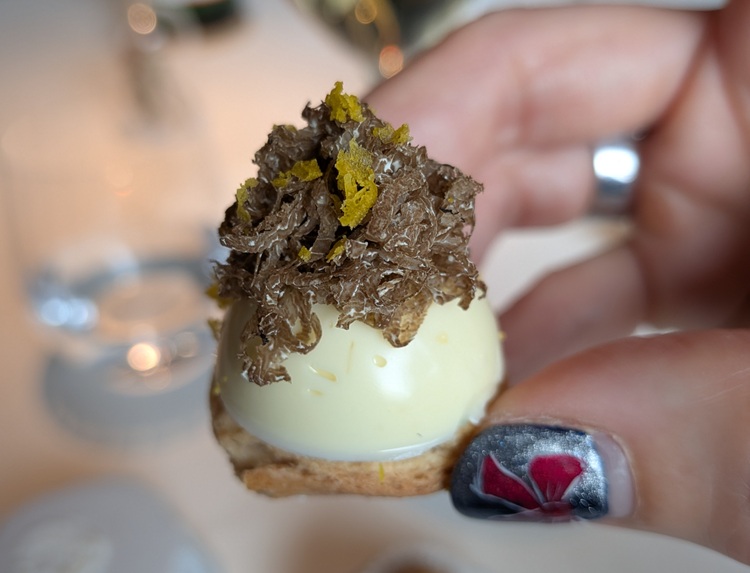
Traveling gluten free may feel intimidating at first. Eating out may require a bit more awareness. But with the right mindset and a little creativity it’s absolutely possible to continue exploring the world, enjoying great food (including gluten free Michelin-star dining!) and even building something meaningful out of it.
Sometimes (and you can never know when!) what initially looks like a limitation becomes the starting point of a completely new journey. In my case, it quite literally did.
And if you’re currently navigating life with gluten intolerance too, I hope my story reminds you that it doesn’t have to stop you from enjoying food or exploring the world. Do you want to share yours? I wait for you in the comments!
F.A.Q.s about gluten intolerance
If you suspect gluten intolerance, the first step is usually to rule out celiac disease through medical testing such as blood tests and sometimes a gastroscopy. If those tests are negative but symptoms improve when gluten is removed from the diet, doctors may diagnose non-celiac gluten sensitivity.
Gluten intolerance can cause a wide range of symptoms, including bloating, stomach pain, digestive discomfort, fatigue, headaches and brain fog. In many cases the symptoms appear shortly after eating gluten-containing foods and improve once gluten is removed from the diet.
No. They are both forms of intolerance, but celiac disease is an autoimmune condition in which eating gluten triggers an immune response that damages the intestine. Gluten intolerance, also called non-celiac gluten sensitivity, causes symptoms but without autoimmune reaction.
Yes, traveling gluten free is absolutely possible. It may require a bit more planning, such as researching restaurants in advance or carrying emergency snacks, but many destinations now offer increasing gluten free options for travelers. Just make sure they know how to handle gluten free food and avoid cross-contamination!
Generally speaking, yes. People with celiac disease must strictly avoid cross-contamination, which can make eating out more challenging. Those with non-celiac gluten sensitivity may sometimes tolerate small traces of gluten without severe consequences, although symptoms can still occur.
Yes. Some people develop gluten intolerance later in life, even if they previously had no noticeable symptoms. In many cases the condition is only discovered after years of unexplained digestive issues.


No comments yet